
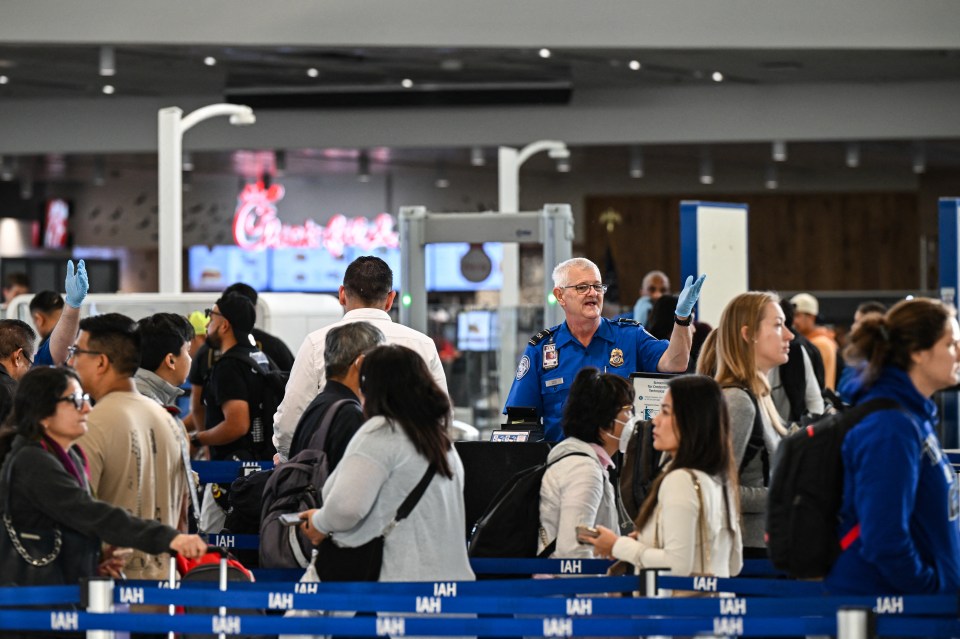
(WASHINGTON, D.C.) — At 12:01 AM this morning, Valentine’s Day, February 14, 2026, the United States Department of Homeland Security (DHS) officially entered a partial funding lapse. For the millions of Americans heading to airports for the long President’s Day holiday weekend, the political stalemate in Washington has suddenly become a very personal crisis.
While the “Big Beautiful Bill” passed last year ensures that border enforcement and ICE operations remain fully funded through separate appropriations, the Transportation Security Administration (TSA) is now operating without a budget. This means that approximately 60,000 TSA officers are now “essential employees” working without a paycheck.
The Root Cause: Why is the TSA Working Without Pay?
To understand why security lines are growing, travelers must look to the Senate floor. The current shutdown is the direct result of a 52-47 vote failure late Friday night. Senate Democrats, led by Majority Leader Chuck Schumer, blocked a funding patch after the White House refused to accept new “guardrails” on federal law enforcement tactics.
The conflict stems from “Operation Metro Surge” in Minneapolis. Following the fatal shooting of citizens Alex Pretti and Renee Good by federal agents last month, a political firestorm has erupted. Democrats are demanding a ban on federal agents wearing face masks during arrests and stricter warrant requirements.
In a “shot across the bow” on Friday night, Schumer stated that the American people would not fund an agency that “operates in the shadows.” Conversely, the administration has refused to “hamstring” law enforcement, leading to the current lapse that has left the TSA in the lurch just as the spring travel season begins.
The Legislative “Big Beautiful Bill” Paradox
To truly understand the 2026 DHS shutdown, one must look at the fiscal architecture of the “Big Beautiful Bill” (BBB) passed in late 2025. Unlike previous years where the Department of Homeland Security was funded under a single “omnibus” package, the BBB decoupled several key agencies. This was a strategic move by the administration to ensure that border security could never be held hostage by a general budget dispute.
As a result, the $75 Billion Border Security Fund is what experts call “auto-appropriated.” This means that even though the DHS technically has no budget today, the paychecks for ICE agents in the field and the funding for the “Digital Wall” sensors remain active. This has created a bizarre “two-tier” system within the federal government. On one hand, you have the TSA agents at the airport who are being asked to serve the public for free; on the other, you have federal agents in Minneapolis and along the Southern Border who are receiving full compensation.
Real-Time Airport Impact: TSA Wait Times and Hub Status
As of 9:00 AM EST, reports from major hubs indicate that while security checkpoints remain open, the “vibe” at the airport has shifted. Aviation experts warn that this shutdown may feel more “aggressive” than the 43-day lapse last fall. TSA agents are still financially recovering from that event, and the prospect of missing another mortgage payment is leading to a spike in “unscheduled absences.”
Current Status of Major US Hubs:
-
Minneapolis-St. Paul (MSP): As the epicenter of the political tension, MSP is seeing heightened security and potential protests. Travelers should allow a minimum of 4 hours for security clearance.
-
Hartsfield-Jackson Atlanta (ATL): Expect wait times at the North and South terminals to exceed 90 minutes by mid-afternoon.
-
Los Angeles International (LAX): Staffing levels are currently at 85%. “Sick-outs” are being reported primarily in Tom Bradley International Terminal.
-
Chicago O’Hare (ORD): Air traffic controllers (FAA) are still being paid, so flights are taking off, but getting to the gate is the primary bottleneck.
What Services are CLOSED? (Detailed List)
Many travelers assume a “shutdown” means everything stops. This is not true, but several high-intent services are officially offline:
-
Global Entry Enrollment Centers: All centers located in federal buildings are CLOSED. If you had an interview scheduled for today, it is canceled and must be rescheduled once the government reopens.
-
TSA PreCheck Enrollment: Because this is fee-funded, most private enrollment centers (like Staples or IdentoGO) remain open, but the federal background check process will likely face a massive backlog.
-
DHS Public Affairs: If you have a dispute or a “Redress Number” issue, there is no one in the office to answer the phone.
-
CISA Cybersecurity Training: Most non-essential training for the Cybersecurity and Infrastructure Security Agency is halted, potentially slowing national defense against cyber threats.
Deep Dive: The Alex Pretti and Renee Good Minneapolis Incident
The names Alex Pretti and Renee Good are now etched into the history of American civil rights. The events of January 2026 in South Minneapolis served as the catalyst for this entire government shutdown.
Alex Pretti, a 37-year-old intensive care nurse at a VA hospital, was caught in a scuffle with immigration officers on Jan. 24. Bystander video shows a half-dozen officers taking Pretti to the ground; two officers opened fire after spotting his licensed, holstered firearm. Similarly, Renee Good was shot in her car on Jan. 7 by an ICE officer who claimed she tried to run him over—a claim challenged by multiple bystander videos.
The subsequent investigation has revealed that two of the officers involved may have provided untruthful statements under oath. This led to Senator Amy Klobuchar and others demanding the “Transparency in Policing Act” be attached to the DHS budget. The White House’s refusal to allow “civilian oversight” of federal tactical teams is the exact point where the 60-vote threshold failed in the Senate last night.
Economic Ripple Effect: The Cost of a National Travel Delay
The shutdown doesn’t just impact the person standing in the security line; it has a massive “downstream” effect on the US economy. According to the American Hotel & Lodging Association, a weekend of travel delays can result in a $400 million loss in canceled bookings and missed tourism revenue.
Furthermore, the “Just-in-Time” logistics industry relies on air cargo. While cargo pilots are still being paid, the TSA inspectors who clear the freight are not. If the shutdown lasts more than 72 hours, we expect to see a “bottleneck” in high-value electronics and pharmaceutical shipments arriving from overseas. This could lead to a temporary spike in consumer prices, potentially threatening the new 2.4% inflation low that the Treasury recently celebrated.
TSA Survival: 5 Essential Tips for Today’s Travelers
-
Arrive 3 Hours Early: The old “2-hour rule” is dead. If you are flying international, make it 5 hours.
-
Monitor the “MyTSA” App: While it may not be “managed” during the shutdown, crowdsourced data from other travelers still populates.
-
Pack “TSA-Perfect”: Avoid liquids and gels. Every “bag search” takes an officer away from the line, slowing down hundreds of people behind you.
-
Check for Airline Waivers: Major carriers like Delta and United are beginning to issue “travel waivers” allowing you to rebook your flight for free if you are worried about the shutdown.
-
Empathy is Your Best Tool: The agent checking your ID hasn’t been paid today. A “thank you for being here” goes a long way.
Frequently Asked Questions (FAQ) – TSA Shutdown 2026
-
Is Global Entry still working? Your existing card still works for entry, but all new enrollment interviews are suspended.
-
Can I get a refund for my ticket if the TSA line is too long? Most airlines do not offer refunds for government-related delays, but they may let you rebook.
-
Why is it called a “Partial” shutdown? Because only the Department of Homeland Security is unfunded; the rest of the government is funded through Sept. 30.
-
Is my flight cancelled? No. Air Traffic Control is still being paid. Any cancellations will be due to staffing issues, not the shutdown itself.
Leave a Reply